G’day Queensland homeowners! If you’ve been spotting more ants than usual around your home lately, you’re not alone.
Over-the-counter ant sprays and do-it-yourself (DIY) treatments aren’t enough to rid your home of an infestation, so we’re here to tell you when it’s time to get the ant pest control professionals involved!
Whether you’re in Noosa, Brisbane, or anywhere along our beautiful coastline, signs of an ant infestation can appear faster than you’d expect, especially with our year-round warm weather creating the perfect breeding ground for these persistent little invaders.
The key to protecting your home from ants? Knowing exactly what signs of ants in the house to look for before a small problem becomes a major headache. Let’s dive into everything you need to know about identifying an ant infestation in your Queensland home.
Here Are The Top 6 Reasons Ant Infestations Escalate Quickly In Queensland:
- Year-round warm temperatures keep colonies active and breeding, when in cooler climates they’d normally slow down breeding and foraging over winter
- High humidity levels provide perfect nesting conditions
- Abundant food sources in suburban areas attract multiple species
- Multiple entry points in typical Queensland homes offer easy access
- Seasonal rainfall creates ideal conditions for colony expansion
- Queensland is home to the world’s most destructive invasive ant species, most of which create super colonies that are difficult to eradicate.
The economic impact on households can be substantial. From contaminated food to appliance damage, the costs add up quickly when an infestation takes hold.
6 Telltale Signs You Have An Ant Infestation
If you notice any of the following signs of an ant infestation, get in touch with our team today!
1. Visibly seeing ants walking around inside or outside your home
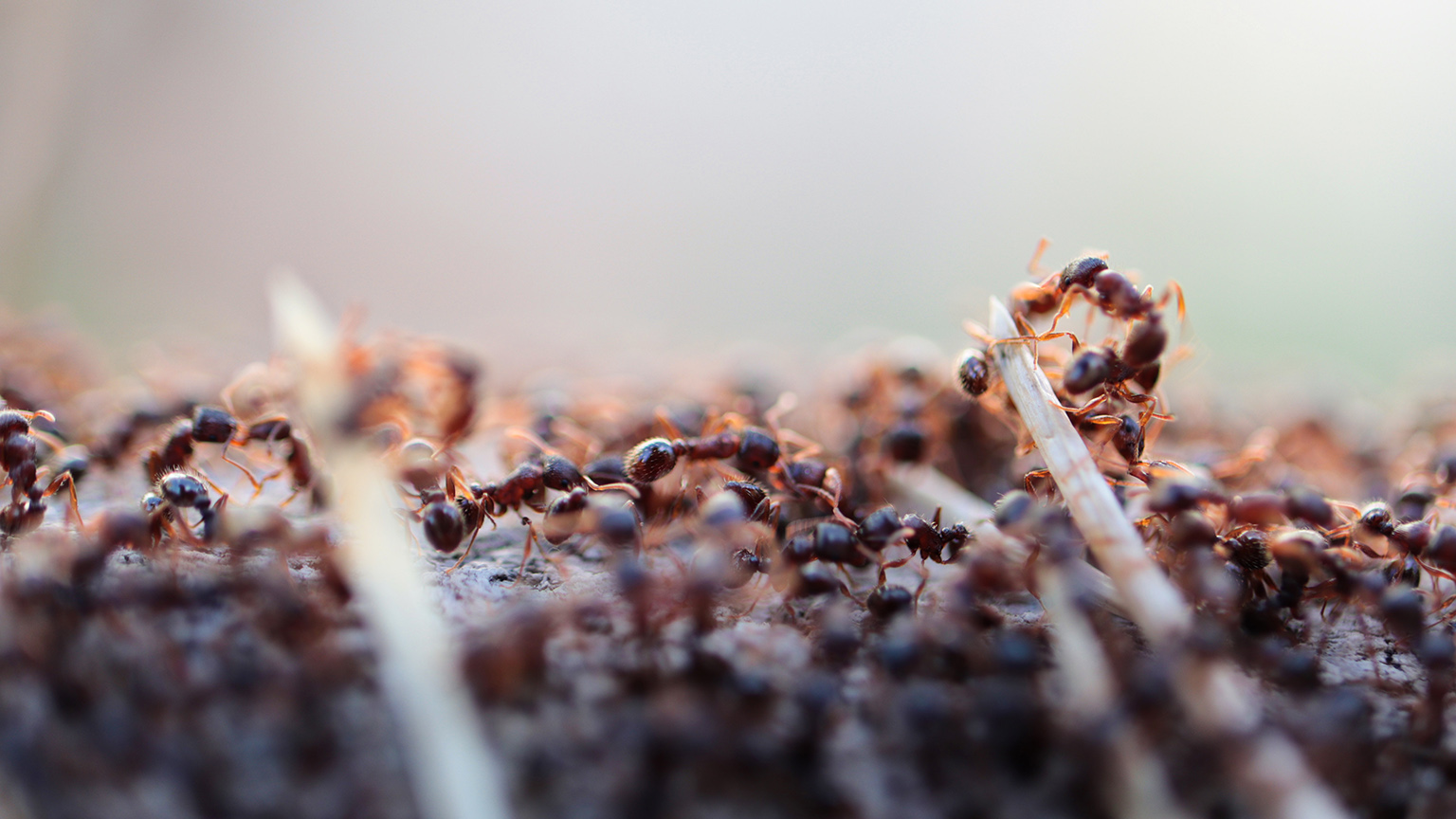
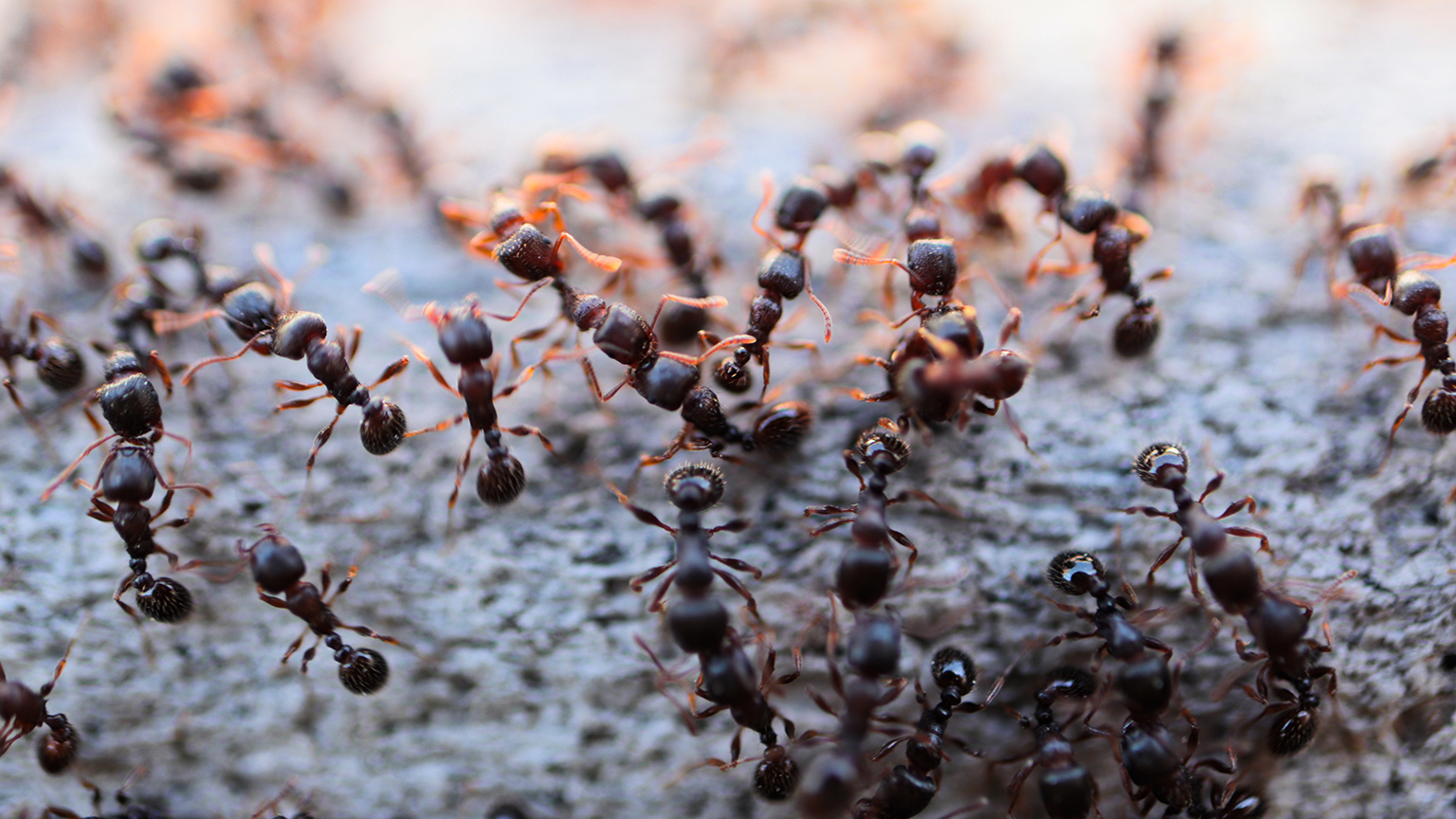
Live ants are the first and easiest sign of an ant infestation. For ants you find outside of your home, it’s only a matter of time before they venture inside. If you notice more ants than the usual few you come across while gardening, including large mounds and big groups of ants clustering together outside, you’re likely dealing with an infestation. These large outdoor ant colonies will eventually find their way into your home, so it’s important to treat the colonies before the ant population explodes!
“What a fantastic experience in dealing Lauren from Bundilla Pest Control. She was prompt, polite, informative and very diligent in treating our 4 bedroom ground level house in Mountain Creek for spiders, ants, cockroaches and other pests. A delight to deal with. Highly recommended and will use again.” – Gerry M.
Seeing ants inside your home is already a cause for concern because it means the ant colonies outside have exploded, or they have managed to build a nest in your home, usually your wall voids.! It’s possible for over-the-counter ant sprays to take out the few visible ants you see, but they won’t destroy the entire colony. Until you can professionally and completely treat the outdoor ant infestation, you’ll continue to see ants return to your home.
2. Coming across a literal ant trail
Have you literally noticed the ants come marching in?
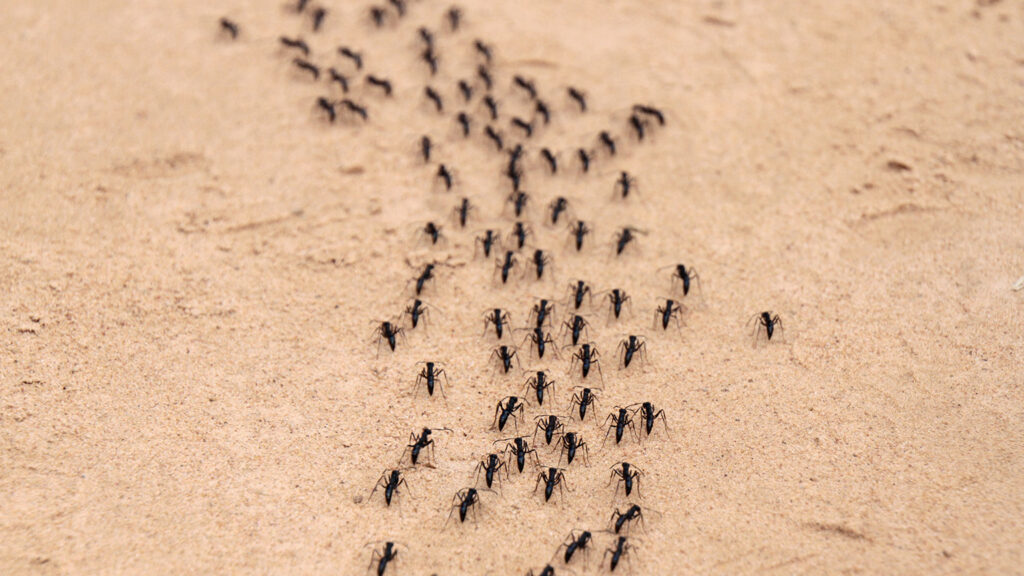
This usually means you’re already dealing with an ant infestation. When ants are found walking through your home in a trail, it’s likely they are setting a pheromone trail to an already found food source. Unless you treat the ants in a way that it transfers back to the colony, it will be difficult to stop them from finding the source again.
3. Finding ant mounds outside your home
As mentioned earlier, if you find a lot of ants outside your home, more than a few, it’s likely you’re already dealing with an ant infestation. Both small and large mounds of dirt with ants may not seem like a big deal because they’re outside, but it means there can be hundreds, if not thousands lurking below the surface just waiting to enter your home due to changes in weather, air pressure, and more.
4. If you’ve left out any food and see ants crawling in or around it
Have you seen ants in food that you’ve left out—hopefully accidentally? Ants aren’t picky eaters! Exposed food is a huge target for ants, which is a big sign your home is infested. Keeping your home clean is the best way to prevent ants from returning.
If you have pets, we recommend keeping an eye on their food bowls.
5. Insect wings on the floor, on window ledges, or close to outdoor entrances
Some ant species develop wings for reproductive flight (nuptial flight). Many companies or blogs will claim that seeing old insect wings within the dust and debris in your home is a sign of an ant infestation, however, you’re more likely to be dealing with termites.
Normally, between November and December or at the height of increased humidity, potential queen termites (alates) take flight to find suitable moist soil where they can establish a thriving colony. Their old wings are then discarded, which is what you might find lying around your home. Don’t assume these are ants! However, this doesn’t necessarily mean you’re dealing with a termite infestation just yet. If you want some peace of mind, get in touch with our team for an onsite termite inspection.
If you’ve also seen any “white ants” we strongly recommend getting in touch with a professional as you might be dealing with a termite infestation.
6. Finding ants living inside your trees
This may seem unusual, but check the trees in your backyard. Ants don’t just live underground, they’re known to live inside of dead branches, diseased trunks and root systems of trees. In time, some species have the ability to kill plants and trees.
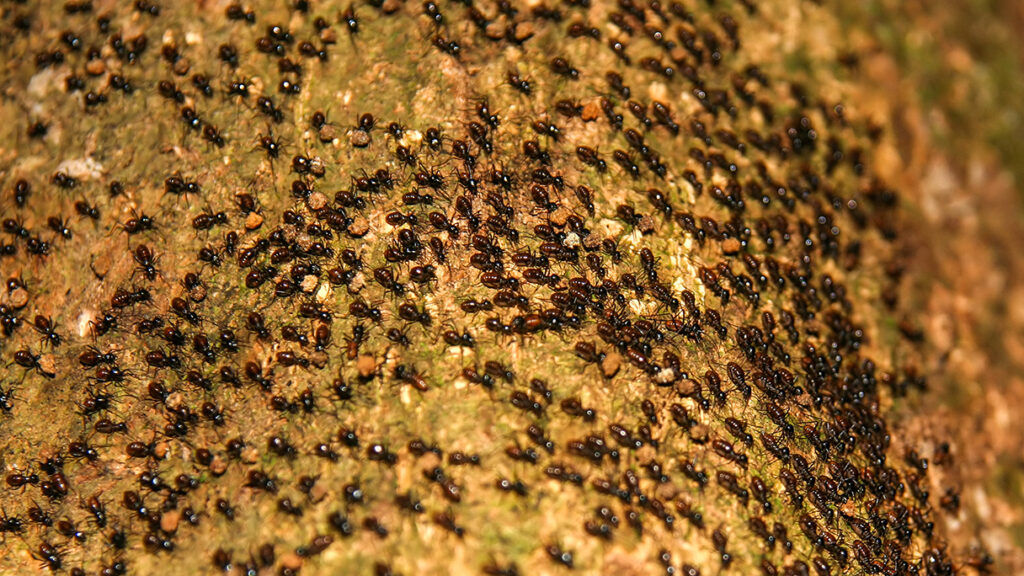
If you notice a lot of ants crawling up and down the branches of your trees, contact your local pest control experts to treat the ants around your home.
How Bundilla Treats Ant Infestations on the Sunshine Coast
Bundilla treats ant infestations at the source on the Sunshine Coast, locating and treating the nest itself, not just the visible trail, using targeted baiting and perimeter treatment. This addresses the colony directly rather than temporarily scattering it, which is the main reason DIY sprays often see ants return within days. Book an inspection if you’re already seeing activity.
Quick Ant Infestation Identification Checklist
Use this handy checklist to monitor your home:
- Daily: Check kitchen counters, sink areas, and windowsills
- Weekly: Inspect pet food storage areas and bowls
- Monthly: Look for small dirt mounds in garden beds and lawns
- Seasonally: Monitor wooden structures for “sawdust” or frass, which is the excavation of timber for nesting or cleaning of galleries by workers.
- After rain: Notice increased activity during warm, humid conditions
“The most common mistake Queensland homeowners make is ignoring the first few ants they see. By the time you’re seeing regular ant activity, there’s usually already an established colony nearby.” – Bundilla Pest Control Technician
Identifying Different Ant Species By Their Signs
Not all ants are created equal, and different species leave different calling cards. Here’s how to identify what you’re dealing with:
Black Ants (Black House Ant/Black Garden Ant)
Visual Identification:
- Size: 2.5-3mm long
- Colour: Jet black or very dark brown
- Body: Smooth, shiny appearance with defined head, thorax, and abdomen
- Antennae: 12 segments with a distinct elbow bend
Behavioural Characteristics:
- Highly attracted to sweets and will scavenge for food, whether in your kitchen or your garbage, and also dog excrement, potentially spreading diseases like salmonella.
- Form well-defined trails along walls and baseboards.
- Most active during warmer parts of the day.
- Nest in soil, under rocks, or in wall cavities.
- Can bite but rarely sting.
Brown Ants (Various Species)
Visual Identification:
- Size: 1.5-6mm depending on species
- Colour: Light brown to dark reddish-brown
- Body: Identification requires expert input
Behavioural Characteristics:
- Behaviour depends on the species which requires professional inspection and identification
- Brown ants are more likely to be destructive invasive species like the Argentine Ant, Coastal Brown/Big Headed Ant, or Electric Ant
- The named ant species cause significant ecological and economical damage and are ranked the most destructive pest species globally
- These destructive invasive ant species create super colonies which are difficult to eradicate if left to reproduce
- Some super colonies can extend thousands of kilometres wide
- Some species are more active at night so can be hard to spot until numbers are in the thousands
- Nesting habits vary by specific species, but tramp ants will forage long distances laying pheromone trails to attract workers to a food source
Bull Ants (Myrmecia spp.)
Visual Identification:
- Size: 8-40mm (among Australia’s largest ants)
- Colour: Black, brown, or reddish-brown with powerful mandibles
- Body: Large head with prominent eyes and strong jaws
Behavioural Characteristics:
- Large mandibles capable of a powerful painful bite
- Extremely aggressive when threatened.
- Deliver painful stings, and some species can cause allergic reactions
- Jack Jumper venom is very toxic and can cause anaphylaxis in vulnerable people and animals
- Excellent vision—they can see movement from several meters away and stalk prey
- Nest in soil and bushland undergrowth, creating small mounds with single entrances.
- Hunt individually rather than in groups
- Most active during daylight hours
Carpenter Ants
Visual Identification:
- Size: 6-13mm long
- Colour: Usually dark brown, orange or black
- Body: Large head with powerful mandibles for chewing wood
Behavioural Characteristics:
- Polymorphic (different sized workers in the same colony)
- With their strong jaws, carpenter ants chew through wooden structures and objects, leaving behind wood shavings, also known as frass
- Active at night. Nest in moist decayed wood. Excavations have sand-papered appearance
- Don’t eat wood, but excavate galleries for nesting.
- General scavengers and predators. Prefer sugary liquids and the sweet secretions of bugs
- Create satellite colonies in different locations
Fire Ants (Red Imported Fire Ant)
Visual Identification:
Size: 2–6 mm
Colour: copper brown in colour with a darker abdomen
Body: found in a variety of sizes within the one nest
Behavioural Characteristics:
- Extremely destructive ant causing ecological, economical and human health harm
- They swarm when disturbed and have a painful sting and bite capable of producing severe allergic reactions including anaphylaxis
- Fire ants typically build nest mounds in sunny exposed areas suitable for their brood to develop quickly. Mounds can reach up to 50cm or higher containing 100,000 of highly dangerous ants within a year.
- Declared a global super pest and are very difficult to control or eradicate – requires professional input
- Biosecurity involvement is required with hefty fines for non-compliance attached ($1.2 million)
Funnel Ants (Aphaenogaster species)
Visual Identification:
- Size: 4-8mm long
- Colour: Brown to dark brown
- Body: Elongated with distinctive spines on thorax. Long legs relative to body size.
Behavioural Characteristics:
- Create distinctive funnel-shaped nest entrances in the soil
- Often found in clear vegetation around nest entrances, creating bare patches
- Primarily seed collectors and scavengers
- Most active during cooler parts of the day
- Less aggressive than many other ant species
Garden Ants (Common Black Garden Ant)
Visual Identification:
- Size: 3-5mm long
- Colour: Dark brown to black
- Body: Standard ant proportions with smooth appearance. Often confused with black house ants, but slightly larger.
Behavioural Characteristics:
- Build nests in soil, often under paving stones or garden paths.
- Create visible ant hills in lawns and garden beds.
- Strong preference for sweet substances and aphid honeydew.
- Form distinct foraging trails.
- Can become aggressive when the nest is threatened.
Ghost Ants
Visual Identification:
Size: 1.3-1.5mm long
Colour: Head and thorax dark brown/black, abdomen pale/translucent
Body: Extremely small with almost transparent rear section. Very difficult to see due to size and coloration.
Behavioural Characteristics:
- Indoor Ghost ants contaminate household foods by attacking sugary items like chocolate, cakes, and sugar
- Prefer warm, humid environments
- Often nest in wall voids, behind baseboards, or in potted plants
- Form multiple satellite colonies
- Extremely difficult to control due to the colony structure
Pavement Ants
Visual Identification:
Size: 2.5-4mm long
Colour: Dark brown to black
Body: Parallel ridges on head and thorax with small spines on the back of their thorax.
Behavioural Characteristics:
- Create nests under pavements, stones, and building slabs.
- Often seen emerging from cracks in concrete.
- Omnivorous but prefer greasy foods and proteins.
- Fight territorial wars with neighboring colonies.
- Active both day and night, depending on the temperature.
Pharaoh Ants
Visual Identification:
Size: 1.5-2mm long for workers
Colour: yellow/brown with brown abdomen
Body: black eyes and 2 small segments at the pedicel
Males: have wings and are usually black and 3mm long
Behavioural Characteristics:
- Nests are rarely found, often nest in voids in and around buildings.
- Active during the day, they feed on a wide range of materials, including sweet, protein, and fats (including syrups, bakery items, grease, dead insects, and meats).
- Form new colonies after their nests have been disturbed from insecticide treatments.
- Multiple queens per colony.
- Prefer warm, humid indoor environments.
- Major health concern as they can carry bacteria.
Singapore Ants
Visual Identification:
Size: 1.5-2.5mm long
Colour: yellow brown to brown
Body: Very small with relatively large head for body size. Similar appearance to Pharaoh ants.
Behavioural Characteristics:
- Singapore ant is also known for nesting in electrical sockets
- Adapting to live inside buildings in sub-tropical climates
- Prefer warm, indoor environments
- Often found in electrical equipment and appliances
- Form multiple satellite colonies
- Extremely difficult to eliminate due to nesting habits
White Ants (Termites—NOT ants, in fact they are related to cockroaches)
Visual Identification:
- Size: 4mm to 15mm, depending on caste and species
- Colour: Pale cream to white with soft transparent abdomens and no eyes (workers), brown/black (soldiers), dark with eyes and wings (reproductives)
- Key difference: Termites have straight antennae that resemble a string of beads, while ants have elbowed or bent antennae. Termites have a broad waist.
Behavioural Characteristics:
- Feed on cellulose (wood, paper, plant matter).
- Live in large colonies with complex caste systems.
- Economically significant species can cause severe structural damage to buildings within 3-6 months
- Can be classified as subterranean (surviving only in connection with moist soil), drywood (surviving hidden inside timber structures without soil), or damp wood (living in damp decaying wood)
- Subterranean termites build mud tubes for protection when moving above ground.
- Swarm between October-March in warm moist seasons for reproduction (called nuptial flight)
- Only 1% of swarming alates will result in a successful queen and king reproductive pair establishing a new colony
Yellow Crazy Ants
Visual Identification:
Size: about 5 millimetres long
Colour: yellowish tan in colour
Body: slender body and long antennae
Movement: Named after their erratic walking style and frantic movements
Behavioural Characteristics:
- Extremely invasive species, causing ecological damage
- Form super-colonies with multiple queens
- Spray formic acid when threatened (can blind small animals)
- Omnivorous with a preference for honeydew from scale insects
- Active both day and night
- Major environmental pest affecting native wildlife
- Prefer tropical and subtropical climates
Recent data suggests that fire ants and carpenter ants are the most problematic species for Queensland homeowners, with peak activity occurring during our summer months (November through February).
For detailed information on treating specific ant species, visit our guide on how to get rid of ants.
Ant Infestation Hotspots in Queensland Homes
Knowing where to look is half the battle. Here are the most common areas where signs of ant infestation appear:
- Indoor hotspots include kitchen and pantry areas, bathrooms and laundry rooms, pet feeding stations, electrical outlets and switches, plus wall cavities and roof spaces.
- Outdoor trouble spots encompass garden beds and mulched areas, spaces under pavers and concrete slabs, tree stumps and wooden structures, compost bins, and outdoor dining areas.
Room-by-Room Ant Inspection Guide
- Kitchen: Check behind appliances, under sinks, and pantry corners
- Bathroom: Inspect around pipes, under vanities, and shower areas
- Living areas: Look near windows, electrical outlets, and pet areas
- Outdoors: Examine garden beds, patio areas, and wooden decking
- Roof/subfloor: Watch for signs of nesting in insulation or timber
When Ant Problems Peak in Queensland
Our beautiful Queensland climate means ant activity doesn’t follow typical seasonal patterns.
- Summer months (November through February) see the biggest surge in ant activity, with our warm weather encouraging colony expansion and foraging.
- The wet season (December through April) brings its own challenges, as increased humidity and occasional flooding can drive ants indoors seeking shelter. During dry periods, ants venture further from their nests searching for water sources.
Professional pest control services report their busiest periods align with these seasonal patterns, with call volumes increasing by up to 40% during peak summer months.
“Queensland homeowners should be most vigilant during the transition from dry to wet season, when ants are actively searching for new nesting sites and food sources.” – Bundilla Pest Control Professional
Should You Inspect For Ants Yourself Or Call The Professionals?
While basic visual inspections can help you identify obvious signs of ants in the house, there are limitations to DIY detection methods.
DIY approaches work well for surface-level monitoring, like checking for visible trails, obvious nests, and food contamination. Simple bait testing can help determine ant preferences, and regular monitoring helps track activity levels.
However, professional assessment offers significant advantages including expert species identification, detection of hidden colonies, comprehensive property evaluation, and strategic treatment planning.
When to Call Professionals Immediately For Ant Problems
- Multiple ant species are present in your home
- Fire ant mounds are discovered on your property
- Previous DIY treatments have failed to solve the problem
- Large indoor colonies have become established
At Bundilla Pest Control, our Essential Pest Control Package includes comprehensive ant species identification, colony location mapping, and customised treatment plans designed specifically for Queensland conditions.
Preventing Future Ant Infestations
Whether you’re lucky enough to have already treated your ant infestation or haven’t stumbled upon one, we strongly recommend following these simple, but effective tips to prevent an ant infestation in the future:
1. Eliminate the scout ants before they make it back to the colony!
Scout ants take their jobs seriously! They’re required to find the food sources and make their way back to the colony with directions. If you notice any lonely ants travelling around your home or kitchen, we recommend removing them, removing any trace of a potential trail, and contacting the professionals for an ant control treatment.
2. Repair or seal any cracks or crevices inside your home
This won’t necessarily prevent ants from entering your home, but it can help keep your home clean, leaving fewer places for dust or crumbs to gather.
Homes in Australia are built differently. For example, all window frames have holes (to help avoid condensation), and brick exterior homes all have weep holes. When our team treats a brick exterior home in Queensland for an ant infestation, we often dust within the weep holes.
“⭐⭐⭐⭐⭐ Great job, explained exactly what spray he was using and put little ant bait stickers on kitchen windows and bench where ants were a problem. Very friendly and asked if I had any more questions about the service and explained the 12 month guarantee.” – Sandra S.
If you’re trying to seal any entrance of your home for ants, you’re wasting your time. Ants are tiny and can get into your home through the smallest of crevices. Instead, you have to treat the ants from the outside before they have a chance to get in.
3. Keep your home clean!
This is most likely the easiest and best way to prevent an ant infestation. Ants come looking for food so their colonies can survive. If you keep food and debris away from ants, there’s no need for them to come looking, and if they do, they won’t find anything. To keep your home clean, we recommend:
- Cleaning up any dirty dishes. Don’t leave dishes or leftovers out on the table or in your kitchen sink. Make sure to clean them up when you’re done to avoid attracting ants. Don’t forget to store any leftover food in sealed containers!
- Wipe down and dust high-touch surface areas in your home. We don’t just eat in the kitchen. You’re likely to have a snack in your living room or at your office desk. Wipe down and disinfect these surfaces regularly so there’s no trace of food to attract ants.
- Dust and vacuum regularly. Dusting and vacuuming will keep any additional food debris from hanging around surfaces and your floor.
- Put any rubbish away. Take out your rubbish and don’t leave it around for ants to find!
- Don’t leave your pet’s dishes or food on the ground. We recommend setting a feeding schedule so food bowls aren’t kept on the ground for ants to get to.
4. Keep up with any outdoor yard maintenance.
Keeping your yard clean, swept, and weed-free will help you notice ant mounds or any ant colonies living inside of your trees—this way you can deal with them sooner!
Regular yard maintenance also has the benefit of keeping away other insects, not just ants! For example, regularly mowing your lawn will prevent spiders from gathering and spinning webs.
Don’t forget to check your gutters! Sometimes ants will climb up or get carried in through leaves. Keeping your gutters clean will help prevent ants from finding new and clever ways into your home.
5. Call a professional pest control company and keep up with regular maintenance treatments.
There’s no way to get rid of ants completely, but if you are dealing with an ant infestation and choose to treat the problem professionally, it’s also important to maintain regular treatments every 12 months to keep your home ant-free!
“⭐⭐⭐⭐⭐ Always on time, professional and efficient. Fixed my ant problems when others couldn’t. Highly recommend.” – Michelle A.
If you live somewhere with heavy pressure, within a rural setting, backing off bushland, or have lots of palm trees and other plants that attract ants, we recommend regular 6-month ant maintenance treatments.
Ready to reclaim your home from unwanted ant invaders?
Our Queensland-based experts understand local ant species, seasonal patterns, and the most effective treatment approaches for our unique climate.