Protect Your Home With Termite Management System — Sunshine Coast to North Brisbane
abcd:int(2392)
Queensland’s climate makes our region a hotspot for termite activity. Termites can cause serious structural damage long before you notice them, and most home insurance policies don’t cover it. Prevention is the most reliable and cost-effective approach to protecting your home and wallet.
Our family-run business has been protecting homes from termites on the Sunshine Coast and the northside Brisbane area for more than 40 years.
Why termite prevention matters:
🕐 Termites work 24/7; a chemical soil termite management system protects 24/7.
💸 Prevention costs are typically far less than repairs.
🏠 1 in 4 Queensland homes will experience termite activity.
❌ No insurance policies cover termite damage.
Chemical soil termite management systems are a continuous treated zone in the soil around your home’s perimeter that termites can’t cross. A proper chemical soil system requires precision, planning, and careful installation so the treated zone is continuous and uninterrupted around your home. It’s the most reliable long-term protection for existing homes on the Sunshine Coast and North Brisbane.
Here’s exactly what happens from your first consultation through final checks, based on Australian Standards (AS 3660.2) and Bundilla Pest Control’s 40+ years of local experience.
1. Free On-Site Consultation
One of our licensed technicians will inspect your property to:
Measure the full perimeter
Identify construction type
Check for termites or risk factors
They will then assess garden beds, paths, drainage, moisture sources, and any timber-in-soil contact, note where drilling or trenching is needed, look for anything that could break the future system, and provide an initial risk rating based on local termite activity.
2. Termite Management System Proposal and Confirmation
After our free onsite consultation, you’ll be emailed a Termite Management System Proposal which outlines the scope of work and costs.
Our amazing customer service team will be in contact to discuss and answer any questions you may have. We understand this is a big investment and want you to feel 100% prepared with all the information you need!
If you choose our team to help install or refill a termite prevention management system for your home, we will send a document to be signed electronically (very easy—we promise!) to confirm a start date.
Please note, we take a 20% deposit and book a time to conduct the installation.
3. Preparing the Home Perimeter
Before treatment, we prepare the entire perimeter so the treated zone is even and continuous. This includes:
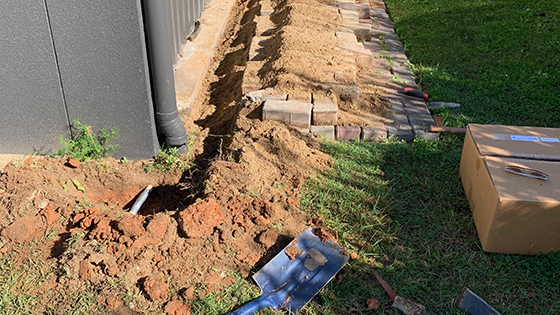
Trenching along soil areas.
Lifting or scraping back pavers, mulch, and debris.
Marking drilling points in concrete.
Protecting irrigation or services.
Checking soil moisture.
Documenting any surfaces to be reinstated.
This preparation helps ensure the termite management system meets AS 3660.2 and stays continuous.
4. Drilling (Where Necessary) Through Concrete, Paths & Pavers
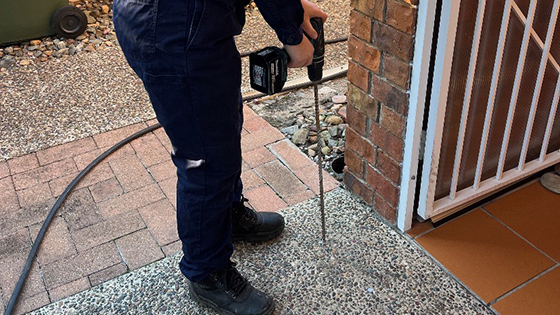
In areas where soil cannot be accessed directly, we drill small, professional holes along the slab edge or perimeter.
Holes are drilled 10–12mm in diameter at consistent intervals (usually 200–300mm apart).
We drill against the footing line or slab edge, depending on construction.
Brick paving or removable stones are carefully lifted and replaced afterwards.
Holes are flushed clean to allow for proper chemical dispersion.
Trafficked areas (driveways, patios) are drilled and sealed neatly.
5. Applying the Termiticidal Treatment
Once all access points are prepared, we apply the chemical soil treatment by:
Treating soil trenches at the correct label rate
Applying measured volumes for even saturation
Injecting drilled holes into the footing with professional rods
Following the manufacturer specs to protect your warranty
Preventing pooling or runoff
Treating exposed roots or timber as needed
Logging and documenting the entire perimeter
6. Reinstating Surfaces & Cleaning the Site
We won’t leave you with a mess! Our team will restore all areas we worked on:
Refill and compact trenches.
Replace pavers, edging, or stones.
Seal drilled holes.
Remove soil/debris and clean pathways.
Ensure landscaping has been returned neatly to original condition.
7. Final Checks, Documentation & Homeowner Handover
Once the chemical termite management installation is complete, we:
Walk the entire perimeter a second time to ensure the zone is continuous.
Review any garden or structural features you should keep an eye on.
Provide verbal instructions and recommendations for maintaining the management system.
8. Certificate Of Termite Management System Installation
We’ll email you a certificate of installation for your records. It outlines the product used, amount, active chemical, expected lifespan, any limitations, and where it was installed.
Keep this certificate because:
It can support the resale of your home.
Future pest control companies can understand your termite system.
It tells you when your system needs to be renewed.
Install A Termite Management System
Get peace of mind and protect your home today with a chemical soil termite management system.
Chemical soil termite management system refills aren’t full reinstalls, but they’re more than a quick top-up. Over time, soil movement, weather, landscaping, irrigation, and natural chemical breakdown weaken the treated zone, so we periodically renew it by re-treating key areas, strengthening high-risk sections, and refreshing the management system through existing drill holes.
After your refill, you’ll receive updated documentation, a new protection date, and clear guidance on how to protect the perimeter.
Standard Refill Guideline
We recommend the following top-up schedule:
A refill or “top-up” every 5 years to maintain a strong, continuous protective zone.
Annual termite inspections to ensure the management system hasn’t been bridged or compromised.
Spot treatments at any areas of high moisture or landscaping changes.
You notice a garden bed rising above the slab edge
Book Your Ongoing Maintenance
We recommend annual maintenance and a refill/top-up treatment every 5 years, depending on soil type, water flow/erosion, landscaping/changes to perimeter, and termite pressure in your suburb.
How Much Does A Chemical Soil Termite Management System Cost?
The cost of a termite management system depends entirely on the size, construction, and access of your home. Most full chemical soil systems fall between $1,200 – $4,000 for a standard 4-bedroom home.
Our pricing will include:
✅ Professional installation
✅ All materials, drilling, and reinstatement
✅ Certificate of management system installation
✅ Warranty period
✅ Aftercare and maintenance recommendations
✅ Photo documentation if requested
What Affects the Cost Of My Termite Management System?
The cost of a termite management system depends on several factors:
Perimeter length & layout: More metres, curves, and levels mean more drilling, trenching, and chemicals.
Construction type: Slab-on-ground, extensions, split levels, or homes on piers can require extra injection points or hybrid solutions.
Access around the home: Tight gaps, retaining walls, fixed garden beds, full concrete, sheds, tanks, and AC units increase complexity and labour.
Soil type & landscaping: Sandy soils often need more chemicals; clay, rock, roots, and dense gardens take longer to treat.
Termiticide used: Different products vary in price and performance. At Bundilla Pest Control, we use premium products as a Termidor Accredited Applicator.
Reduce Your Future Risk Of Termite Damage
Book your initial consultation now to get quality coverage from termites.
Termite baiting systems are sometimes used, but with Queensland’s high termite pressure, they should only be a backup option when a chemical soil management system isn’t possible, or used alongside one.
Baiting only works once termites are already active, while a chemical soil management stops them from reaching your home in the first place and offers more reliable long-term protection. For that reason, we only install baiting systems in rare cases where the building design leaves no other choice and otherwise focus on chemical soil management systems to protect your home and investment.
Prevent Future Damage To Your Home
Book your FREE termite management system consultation today!